.png)
McKinsey's Global Managing Partner, Bob Sternfels, recently put a question into words that a lot of boardrooms are already wrestling with:
"Do I listen to my CIO or my CFO?"
The CIO sees the opportunity. The CFO sees the bill. And somewhere between those two chairs, a decision either gets made or gets pushed to next quarter.
Pushing it to the next quarter has a cost. That's the part most organizations are underestimating right now. Because every decision has a “default decision”, and when we make no decision, we are really making a choice.
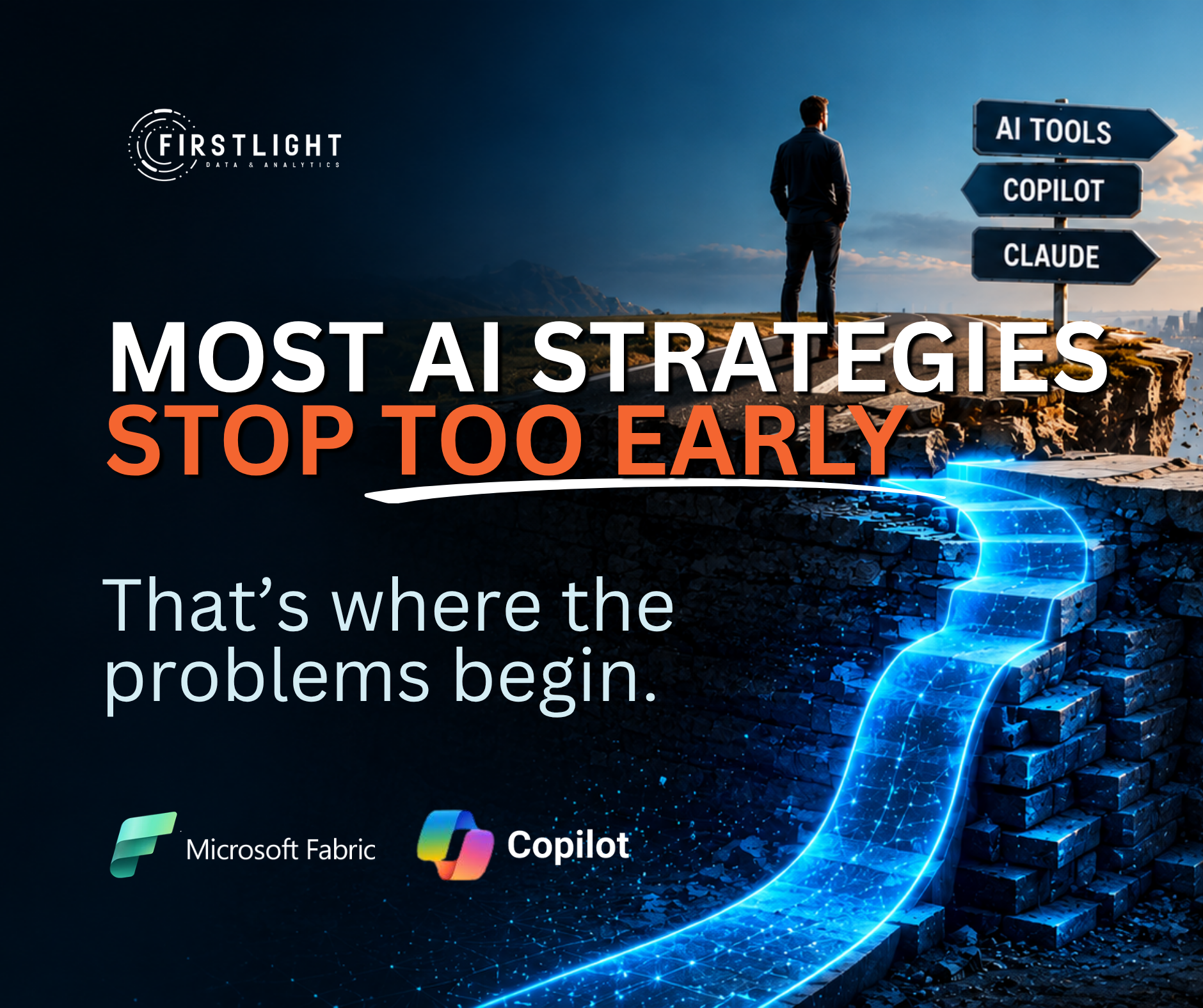
The companies making real efficiency gains on AI right now aren't the ones with the biggest budgets. They're the ones who stopped waiting for a perfect plan and picked something specific to solve. Meanwhile, the organizations still debating whether to act are watching that gap quietly get wider. The longer that goes on, the more expensive the rebound becomes, and the harder it gets to explain why the decision kept getting pushed time after time.
The risk calculus most leaders are running is off. The assumption is that waiting preserves optionality. In reality, it narrows it. The organizations that started twelve months ago have already operationalized a use case, learned what works, and moved on to the next one. They're not just ahead on AI. They're ahead in knowing how to do it, and that institutional knowledge doesn't close quickly.
AI compute is expensive, and scaling it across an organization without a clear target is how budgets disappear without results. The right starting point isn't a technology decision. It's a business one.
Sit with these two questions before anything else:
The more precisely you define those capabilities, the more clearly you can evaluate whether an AI solution is ready for the job. Look for the place where impact is high and effort is realistic. That intersection is where you start.
An AI agent is only as useful as the data it can access. Most organizations underestimate how much of their operational knowledge lives in people's heads rather than in systems. Before AI can work for your business, it needs solid information to work with.
Platforms like Microsoft Fabric bring all of your data into a single data lake, where it becomes accessible and usable for both your team and AI tools. Without that foundation in place, even a well-designed AI implementation will underperform. Getting the data right isn't the glamorous part of an AI project. It's the part that determines whether the rest of it actually works.
.png)
Once you have a clear use case and a data foundation to support it, commit to taking it all the way into daily operations. Pilots and proofs of concept have their place, but too many organizations use them as a reason to delay the real decision. The goal was never a successful test. It was a working solution.
Real operationalization is where you learn what AI actually costs and what it actually requires from the people on your team. Security practices that worked fine before don't automatically hold up when agents are accessing systems dynamically. Microsoft is already building for this reality with M365 E7, which brings advanced agent management through Agent 365 alongside additional Defender and Entra capabilities designed specifically for AI-enabled workforces.
Taking a use case into production also gives you something your CFO needs to see:
The first use case is the hardest. After that you have something more valuable than a result. You have a process. You know what the data requirements look like, where the security questions come from, and how to measure whether an agent is actually doing what it's supposed to do. That knowledge compounds. Each use case after the first one moves faster and costs less to get right because you're not starting from zero anymore.
Keep tracking ROI as you go. Agents will need adjustment as your business changes, and expecting that going in is half the battle. The organizations that struggle are the ones that treat the first deployment as the finish line. The ones that get ahead treat it as the starting point for everything that follows.
The organizations getting this right aren't the ones with the biggest AI budgets. They're the ones that made a deliberate decision to start, picked the right problem, and didn't stop at the pilot stage. That choice is available to any business leader sitting in that room right now, regardless of what the CIO and CFO are arguing about.
The question was never whether AI would change how business gets done. It already has. The only question left is whether you're the one deciding how it changes yours. If you want to talk through what that first step looks like for your organization, FirstLight Analytics is the right partner to have that conversation with.
{Schedule Your Free Assessment Below}
https://www.firstlightbi.ai/ai-analytics-consulting





.png)
.png)



.webp)