.png)
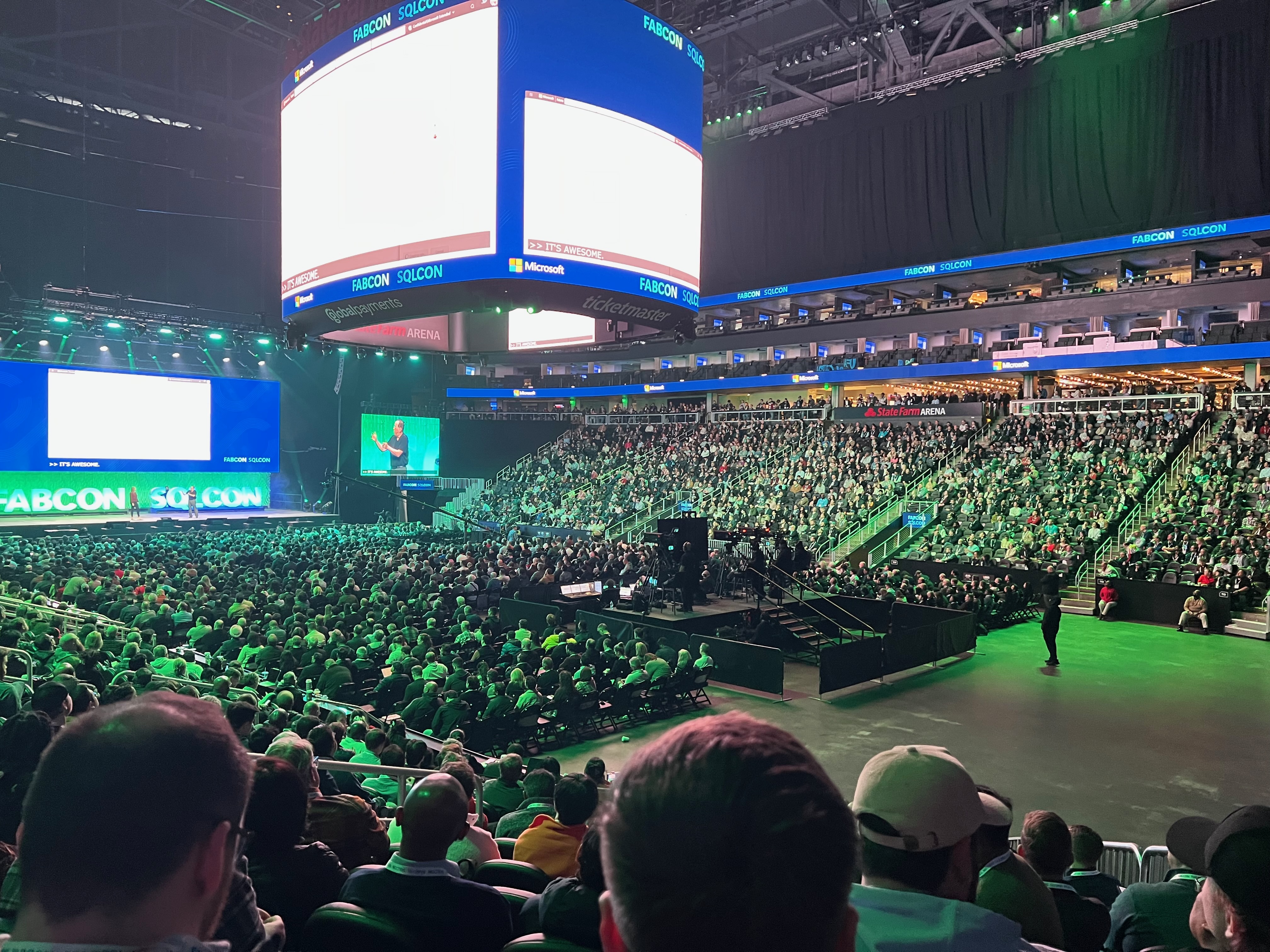
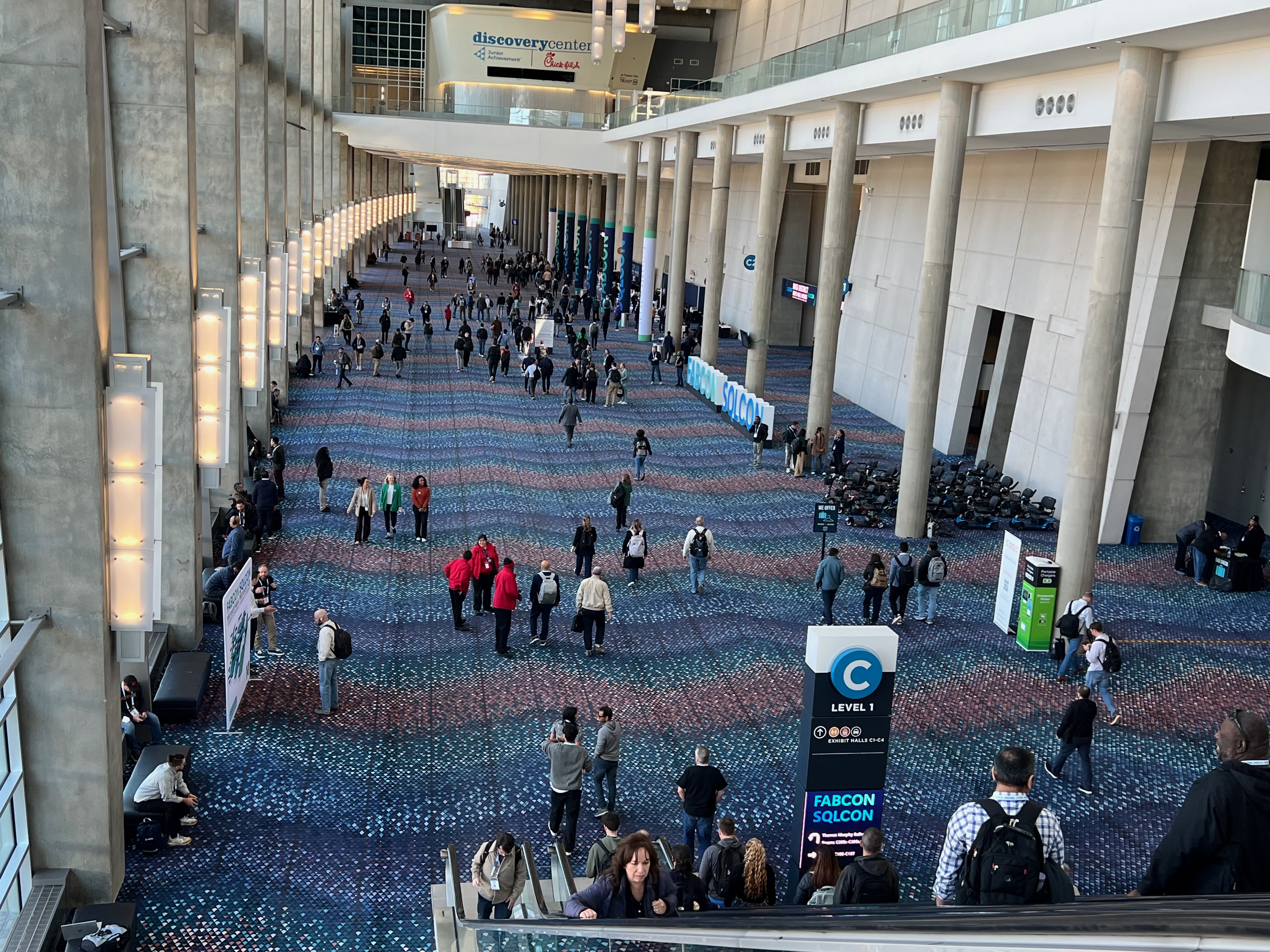
FabCon + SQLCon landed in Atlanta this year with over 8,500 attendees, and the energy in the room matched the scale. Real companies took the main stage with real results, not projections or prototypes. AI is here and it’s happening at scale at frontier firms. There were some genuine surprises and a few quieter updates that carry bigger implications than they got credit for.
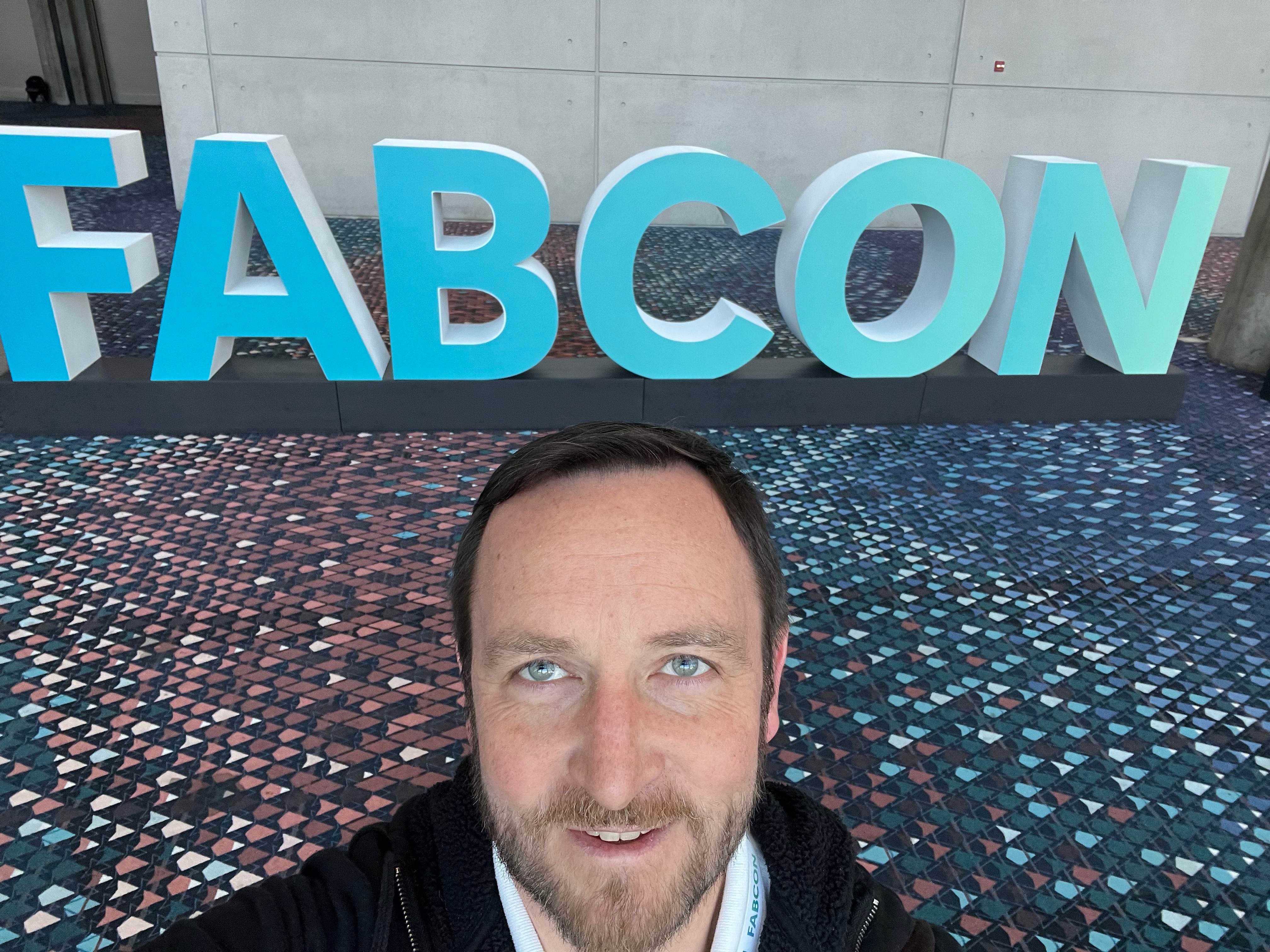
Brent Lightsey, CEO of FirstLight Analytics, was on the ground for all of it. What follows are the 5 (plus a bonus) takeaways he came back with, and what each one means for your business.
CSX took the stage and described something that most people would call a simple idea. They set up alerts in Fabric's Real-Time Intelligence to watch for idling trains, and when one was detected, engineers got a notification to shut the engine down. The diesel savings from that single use case covered their entire Fabric implementation cost. Not over time, but immediately. ROI on day one.
JetBlue was also there, walking through how Real-Time Intelligence keeps their gate operations in sync. Crews, jets, passengers, all coordinated through a single platform in real time.
A large-scale energy producer in Western Canada is planning an implementation of Fabric to track energy production in real time using Fabric RTI (Real-Time Integration).
What the stories have in common is that companies are going beyond Fabric as just a platform for Power BI. They are running operations through it. If your organization still thinks of Fabric as the place where dashboards live, you are leaving operational efficiency opportunities on the table.
Lumel has offered a Fabric-native writeback workload for over a year, but it just got a significant upgrade in status. Microsoft pulled it into Fabric as a first-class workload, which means it now comes with your license at no additional cost.
The obvious application is financial planning and analysis. Your team can write data back into Fabric instead of just pulling from it, which is a capability most organizations have been cobbling together through workarounds. But the writeback capability goes beyond FP&A. Any scenario where someone needs to update a table, submit data, or make an entry into a structured dataset can run through this.
There is also a feature inside it called Power Table. Think of it as a Smartsheet or Monday.com replacement, but one where the data actually lives in your Lakehouse and inherits your existing security rules. If you are paying for those tools right now, that conversation with your CFO just got easier.
OneLake has always stored data in delta parquet format, which happens to be the same native format Databricks uses. That alignment was useful but quiet. Now that both OneLake and Snowflake have added support for Apache Iceberg table formats, the story has changed in a very meaningful way.
You can run bi-directional integration between Fabric, Databricks, and Snowflake without copying any data. The platforms read all from the same place.
What that actually means for your organization is reduced lock-in. You are no longer making a bet on one vendor and building your entire architecture around its limits. You can put each platform where it performs best, and when contract renewal time comes around, you are negotiating from a different position. These vendors are going to be competing for your compute budget.
This one got less attention in the room than it deserved. Through Microsoft Purview and Entra ID, a data classification rule applied when data enters OneLake will follow that data everywhere it goes. Into a query, a notebook, an Excel file someone exports on a Tuesday afternoon. The classification travels with it.
The reason this matters right now specifically is AI. AI Analyst Agents pull information in ways that traditional access controls were not designed for. A user asks a question in natural language, and the agent goes looking. Microsoft's approach means the agent can only surface data the person asking is actually authorized to see, because the rule lives at the data level, not the application level.
If you have been asked by your board or your legal team how AI access controls actually work, this is a concrete answer. It’s also the kind of answer that holds up under scrutiny.
The most honest section of the conference was about agents, and the honesty is worth carrying forward. Getting an agent to take action is not the challenge. Getting it to take the right action, repeatedly, with any real consistency is where things break down.
Narrow scope matters more than most people expect. An agent given a tight, specific purpose will outperform a broader one almost every time. The current best tools for testing agent behavior before it reaches your users are through the Fabric CLI tools, and few-shot evaluation scenarios are still the most reliable method for catching problems early.
Here is the plain version: these agents will not hit 100% accuracy. They will misread intent sometimes. They will understand intent correctly and still return a wrong answer at times. Getting above 90% accuracy is a realistic goal. Getting further than that requires iteration. Feedback loops, better instructions, and better tools fed to the model over time. If your team is building with agents, or if a vendor is telling you their agent is ready to deploy, the question to ask is what their evaluation process looks like. Make sure you ask before you sign anything.
For organizations still running on-premise workloads, SQL Server 2025 is worth a conversation with your data team. It ships with native AI capabilities that run on your own hardware, and it handles JSON data meaningfully better than previous versions.
If a full upgrade is not on the roadmap yet, at minimum, have your team look at SQL Server Management Studio v22. GitHub Copilot is now built directly into it, and for anyone doing data work day to day, that is a real shift in how fast they can move.
The Microsoft platform covered a lot of ground at FabCon this year, and not all of it lands the same way for every organization. If you want to talk through which of these updates are actually relevant to where your business is right now, that is exactly the kind of conversation FirstLight Analytics is built for. Fill out the form below, and we will get something on the calendar.
PS - Feeding 8,500+ people lunch was quite a feat. Box lunches to the rescue!
Schedule your assessment below!
https://www.firstlightbi.ai/ai-analytics-consulting






.png)
.png)



.webp)